Solar Panel Verification – How to Check Original & Authentic Solar Panels
Fake solar panels are a real problem in today’s fast-growing solar market. Many panels look original on the outside, carry popular brand names, and are sold at attractive prices — but their performance, lifespan, and warranty often tell a different story later. This is where solar panel verification becomes essential. Verifying a solar panel helps you confirm whether the product you’re buying is genuinely manufactured by the brand it claims to be, or just a counterfeit copy with stickers and labels.
The good news is that verifying solar panels is not complicated. Most leading manufacturers now provide official verification tools that allow you to check a panel using its serial number, barcode, or QR code. When combined with a few simple visual checks, these methods can protect you from costly mistakes. In this guide, you’ll learn how to verify original solar panels step by step, understand the difference between verification and authenticity, identify common signs of fake panels, and safely check panels from major global solar brands — all in one place.
Brand-Wise Solar Panel Verification Links
Most well-known solar panel manufacturers now provide official verification links to help buyers confirm whether a solar panel is genuine. These links are designed to verify a panel using itsserial number, barcode, or QR code, and they access records stored directly in the manufacturer’s database.
Using brand-specific verification links is one of the most reliable steps in solar panel verification. Unlike visual inspection or seller assurances, these links rely on manufacturer-controlled data, making them far more accurate and trustworthy.
Below is an overview of how verification works for major global solar panel brands and what you should expect when using their official links.
How Brand Verification Links Work (Quick Overview)
The verification process is usually simple and follows the same pattern across brands:
- Locate the serial number, barcode, or QR code on the solar panel
- Open the official verification page provided by the manufacturer
- Enter or scan the serial number
- Review the product details returned by the system
If the panel is original, the system confirms its identity. If the panel is fake, altered, or unregistered, the result may show no record, invalid data, or incomplete information.
Brand-Wise Solar Panel Verification
| Serial number/label check | Verification Method | What Verification Confirms | Official Links |
|---|---|---|---|
| LONGi Solar | Serial number / QR code | Model, wattage, production details | Official LONGi verification page |
| JA Solar | Serial number entry | Authentic module & specifications | Official JA Solar authenticity checker |
| Trina Solar | Serial number verification | Module identity & manufacturing info | Official Trina Solar verification link |
| Jinko Solar | Serial number / QR scan | Product record & model confirmation | Official Jinko Solar checker |
| Canadian Solar | Serial number check | Panel specifications & traceability | Official Canadian Solar verification |
| Astronergy | Serial number verification | Genuine module details | Official Astronergy verification page |
| Risen Energy | Serial number / product code | Confirmation of original module | Official Risen Energy authenticity link |
| Crown Solar | Serial number / label check | Panel identification & basic authenticity | Official Crown Solar verification page |
| AIKO Solar | Serial number verification | Product authenticity & model details | Official AIKO Solar verification link |
Tip: Always access verification links through the manufacturer’s official website. Avoid third-party pages that claim to verify panels on behalf of a brand.
What a Successful Verification Result Looks Like
When a solar panel is verified successfully, the official link usually displays:
- Confirmed brand and model name
- Accurate wattage rating
- Production or batch information
- In some cases, shipment or traceability details
If these details do not match what is printed on the panel, treat it as a serious warning sign.
Important Notes for Buyers
- Verification links may vary slightly by brand, but the core process is similar
- A “not found” result does not always mean fake, but it requires further investigation
- Always combine brand verification with visual inspection and warranty confirmation
⚠️ Disclaimer
Verification links are provided and maintained by manufacturers. Availability, layout, or verification methods may change over time. For accurate results, always use the official manufacturer’s website.
What Is Solar Panel Verification?
Solar panel verification is the process of confirming whether a solar panel is genuinely manufactured by the brand it claims to be. It goes beyond simply trusting the brand name printed on the panel and focuses on checking verifiable details provided by the manufacturer itself.
In practical terms, solar panel verification usually involves checking a unique serial number, barcode, or QR code on the panel against the manufacturer’s official database. If the panel is original, the system confirms its model, specifications, and production details. If it is fake or unregistered, the verification result will either fail or show incomplete information.
Many people assume that a branded sticker or a convincing label means the panel is genuine. In reality, counterfeit panels often copy logos, colours, and even packaging. Verification removes this uncertainty by relying on manufacturer-controlled data, not visual appearance alone. Simply put, solar panel verification gives you proof. It replaces guesswork with confirmation and helps you make a safe, informed decision before investing in a solar system.
Solar Panel Verification vs Authenticity
Many people use the terms solar panel verification and solar panel authenticity interchangeably. While both are closely related, they are not exactly the same — and understanding the difference can help you avoid costly mistakes.
Solar panel authenticity refers to whether a panel is genuinely produced by a real manufacturer. In simple words, it answers the question: Is this panel original or fake? Authenticity is about the panel’s true origin.
Solar panel verification, on the other hand, is the method used to prove authenticity. It involves checking the panel’s serial number, barcode, or QR code through an official manufacturer system to confirm that the panel exists in their records.
Think of it this way:
Authenticity is the claim, while verification is the proof.
A panel may look authentic, carry a well-known brand name, and even come with packaging — but without successful verification, there is no reliable way to confirm that it is genuinely manufactured by that brand. This is why verification is considered the most trusted way to check solar panels before buying or installing them.
In short, authenticity tells you what the panel is supposed to be, while verification confirms what it actually is.
Check out Solar Panel Prices
Why Fake Solar Panels Exist
Fake solar panels exist because the demand for solar energy has grown rapidly, while most buyers are still learning how to evaluate solar products properly. This gap creates opportunities for counterfeit and low-quality panels to enter the market.
One of the most common reasons is price competition. Many buyers focus mainly on getting the lowest price, which allows dishonest sellers to offer refurbished, downgraded, or fake panels that look original on the surface. These panels are often fitted with new stickers, altered wattage labels, or copied brand logos to appear genuine.
Another reason is the complexity of solar products. To a new buyer, two panels can look almost identical, even though their internal quality and performance are very different. Without verification, it becomes easy for fake panels to pass as original.
In some cases, panels may be real products that failed quality tests or were never intended for retail sale. These are sometimes sold as “new” panels without proper documentation, warranties, or manufacturer records. While they may work initially, their long-term performance and reliability are often compromised.
This is why relying only on appearance, packaging, or the seller’s claims is risky. Verification exists to remove these uncertainties and give buyers a clear way to confirm what they are actually paying for.
To calculate your load check Solar Load Calculator
How to Verify Original Solar Panels (Step-By-Step Guide)
Verifying a solar panel does not require technical expertise. You simply need to follow a few structured steps and rely on official manufacturer data instead of appearances or seller claims.
Below is a practical, step-by-step method you can use to verify whether a solar panel is original or fake.
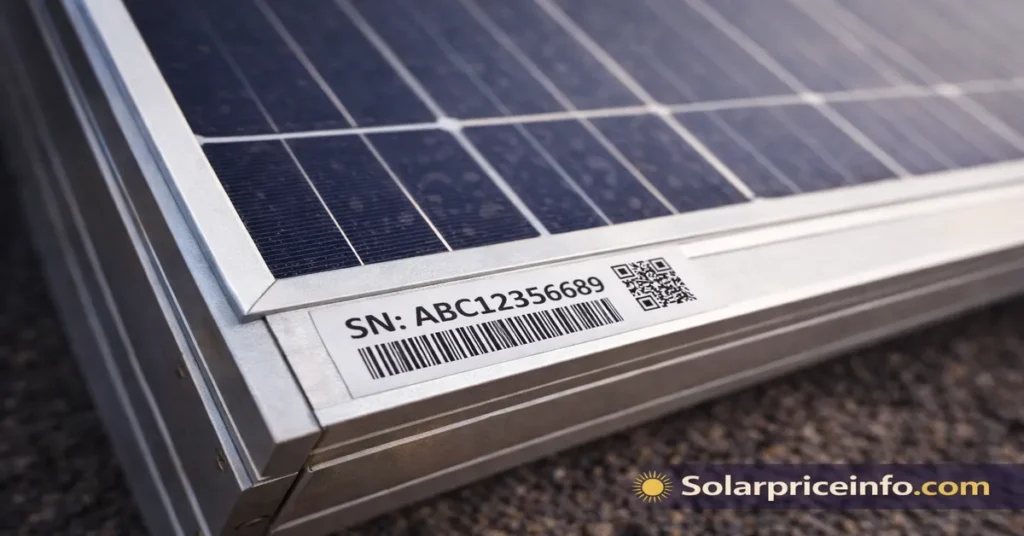
Step 1: Locate the Serial Number or Barcode
Every genuine solar panel carries a unique serial number, usually printed on a label fixed to the panel frame or rear side. Some panels also include a barcode or QR code linked to this serial number.
Before moving forward, check that:
If a panel has no serial number or the label looks tampered with, this is an immediate red flag.
Step 2: Use the Manufacturer’s Official Verification Tool
Once you have the serial number, visit the manufacturer’s official verification or authenticity page. Most leading brands provide an online tool where you can enter or scan the serial number.
After submitting the serial number:
This step is the most reliable way to verify a solar panel, because the data comes directly from the manufacturer’s database.
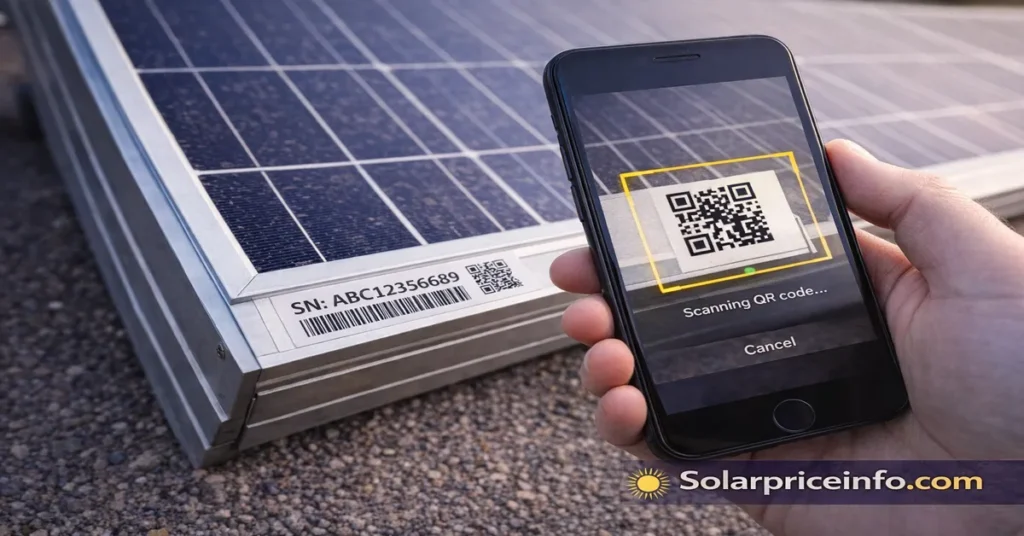
Step 3: Scan the QR Code (If Available)
Some modern solar panels include a QR code linked to product information. You can scan it using your smartphone camera or a QR scanner app.
Keep in mind:
QR codes are helpful, but they should support verification, not replace it.
Step 4: Match the Product Details
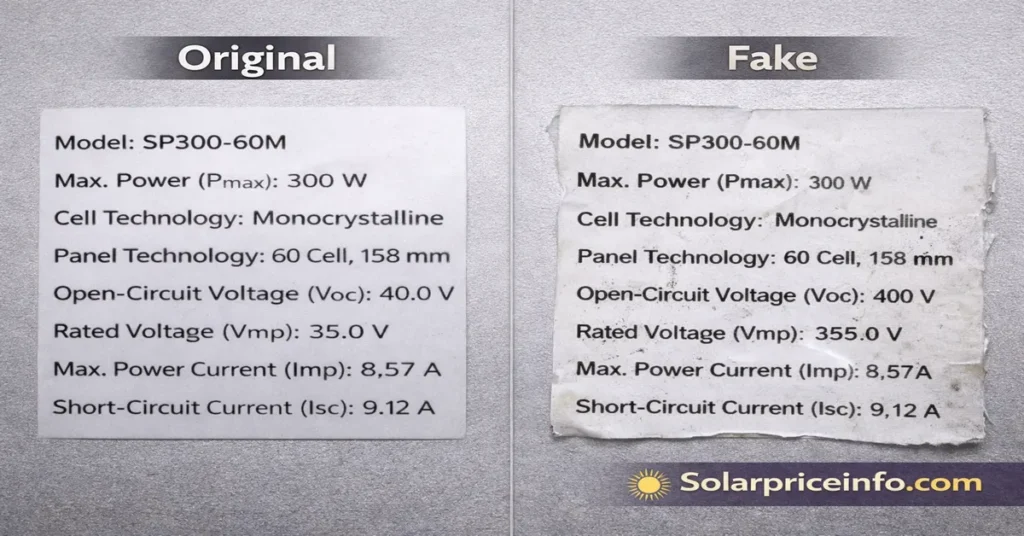
If the verification result is successful, compare the information shown on the official page with the physical panel.
Check carefully:
If the database shows different specifications than what is printed on the panel, the product should not be considered reliable.
Read More: Longi Solar Online Verification – Check Original Panels
Physical Signs of Fake Solar Panels (Visual Inspection)
Even after using official verification tools, a quick visual inspection can help you spot warning signs early. While appearance alone should never replace solar panel verification, physical checks are useful for identifying panels that are clearly low-quality or tampered with.
Here are some common physical signs of fake or unreliable solar panels that buyers should look out for.
Poor Cell Alignment
Original solar panels are manufactured using automated processes, which results in neatly aligned solar cells. In counterfeit or low-quality panels, the cell strings may appear uneven, crooked, or poorly spaced.
Misaligned cells often indicate rushed or manual assembly and can affect long-term performance.
Cracked or Chipped Solar Cells
Inspect the panel surface closely. Cracks, chips, or flakes on the solar cells are strong indicators of substandard materials or poor manufacturing practices.
Even small cracks can reduce efficiency and shorten the panel’s lifespan. Genuine panels are thoroughly inspected before leaving the factory.
Low-Quality or Scratched Glass
Authentic solar panels use high-quality tempered glass to protect the cells and ensure proper light transmission. If the glass looks thin, uneven, heavily scratched, or cloudy, the panel may not be original.
Low-grade glass can reduce energy output and may fail under weather stress.
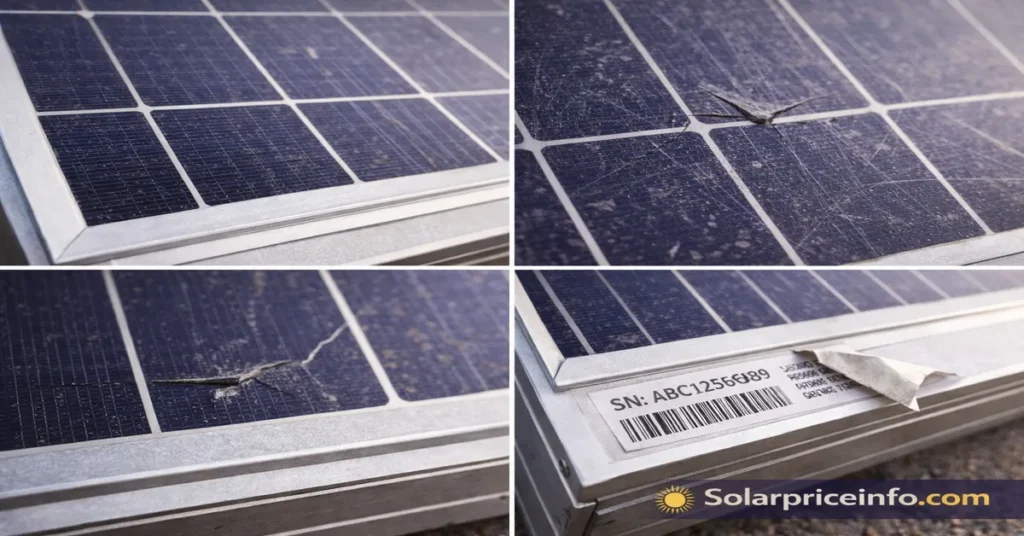
Peeling or Poorly Printed Labels
Check the back label or frame sticker carefully. Warning signs include:
- Peeling edges
- Faded or blurry printing
- Spelling mistakes
- Labels that look newly pasted
Original manufacturers use durable, professionally printed labels designed to last for years.
Inconsistent Build Quality
Look at the panel frame, corners, and junction box. Loose parts, rough edges, or inconsistent finishing are signs that the panel did not go through proper quality control.
High-quality solar panels feel solid, uniform, and well-assembled.
Check Solar Inverter Prices
What to Do If Solar Panel Verification Fails?
If a solar panel does not verify successfully, it does not always mean the panel is fake — but it does mean you should stop and investigate further before proceeding. Verification failures usually happen for a few common reasons, and handling them correctly can save you from costly mistakes.
Below are clear, practical steps you should follow if solar panel verification fails.
Step 1: Recheck the Serial Number Carefully
Start by double-checking the serial number you entered:
- Look for common character mistakes (for example, O vs 0, I vs 1)
- Make sure the entire serial number is entered correctly
- If using a QR code, try manual entry instead
Simple typing errors are one of the most common reasons for failed verification.
Step 2: Check the Panel Label Condition
Inspect the serial number label again:
- Is the label damaged, scratched, or partially missing?
- Does it look recently pasted or altered?
- Are there spelling or formatting inconsistencies?
A damaged or tampered label is a serious warning sign and should not be ignored.
Step 3: Confirm You Are Using the Official Verification Tool
Make sure you are verifying the panel through the official manufacturer’s website:
- Avoid third-party pages claiming to verify panels
- Use only the links provided by the manufacturer
- If redirected, confirm the domain belongs to the brand
Using unofficial tools can lead to false “not found” results.
Step 4: Contact the Seller for Documentation
If verification still fails, ask the seller for:
- Purchase invoice
- Warranty or registration documents
- Shipment or batch information (if available)
A trustworthy seller should have no hesitation in providing this information. Resistance or excuses are a strong red flag.
Step 5: Reach Out to Manufacturer Support
Most manufacturers offer customer support for verification issues. Provide them with:
- Clear photos of the panel
- The serial number and model details
- Proof of purchase (if available)
Manufacturers can often confirm whether a panel belongs to their production records or not.
Step 6: Walk Away if Doubt Remains
If verification fails and neither the seller nor the manufacturer can confirm authenticity, the safest option is to walk away from the purchase.
Solar panels are a long-term investment. Buying an unverified panel may lead to:
- Poor performance
- No warranty support
- Early failure and replacement costs
Read More; Canadian Solar Online Verification| How to Check Authenticity of Canadian Solar Panels
Common Mistakes Buyers Make
When buying solar panels, many buyers make simple yet costly mistakes that can lead to poor performance, wasted money, and frustration. By recognising these errors early on, you can ensure that your purchase is both genuine and reliable.
Below are the most common mistakes people make when buying solar panels, and how to avoid them.
Mistake 1: Focusing Only on Price
While price is an important factor, it should never be the sole consideration. Here’s why:
- Cheap panels might look attractive but could be subpar in quality, leading to poor efficiency and a short lifespan.
- A lower upfront cost often results in higher long-term maintenance and replacement costs.
Tip: Always balance price with quality and warranty. Sometimes spending a little more upfront can save you significant amounts over time.
Mistake 2: Ignoring the Verification Process
Many buyers get caught up in the excitement of buying solar panels and forget to verify the product’s authenticity:
- Fake solar panels can often look nearly identical to real ones.
- Without official verification, you could end up with a panel that’s not registered, has been refurbished, or is counterfeit.
Tip: Never skip the verification process. Use official brand tools to ensure that the solar panel is original and meets the manufacturer’s standards.
Mistake 3: Trusting the Seller Blindly
While most sellers are legitimate, some may try to deceive buyers:
- Fake or unregistered panels can sometimes be passed off as genuine.
- Fake warranties are another issue—some sellers offer warranties for panels that don’t qualify for manufacturer support.
Tip: Always ask for proof of purchase, warranty registration, and ask the seller to confirm the panel’s details directly with the manufacturer if needed. A trustworthy seller will never hesitate to provide this.
Mistake 4: Not Checking the Warranty or Support
Solar panels are a significant investment, and a reliable warranty can provide you peace of mind. Failing to check the warranty terms or assuming that all panels come with manufacturer support is a mistake:
- Many fake panels may not have any manufacturer’s warranty, or if they do, it’s often invalid.
- Support can be critical if the panel fails early, and you’ll want to be certain you can get assistance.
Tip: Always confirm the warranty with the manufacturer directly, and make sure it’s valid for the panel you are purchasing.
Mistake 5: Not Understanding the Panel Specifications
Solar panels come in various types, and each has different specifications such as wattage, efficiency, and output. Not understanding these specifications can lead to:
- Buying a panel that does not meet your energy needs
- Purchasing a low-quality panel that might look good on paper but doesn’t perform well in real conditions.
Tip: Always check the panel’s wattage, efficiency, and energy output before purchasing. Make sure these match your energy requirements.
Also Read: Solar Buying Guide: Costs, Types, and Installation in Pakistan
Quick Checklist – Solar Panel Verification Before Buying
To ensure you’re buying a genuine and reliable solar panel, follow this quick checklist. It will help you verify authenticity, avoid mistakes, and make an informed purchasing decision.
Locate the Serial Number or Barcode
- Check the back or frame of the solar panel for a serial number or barcode.
- Ensure it is clear, legible, and unaltered.
Use the Official Verification Link
- Visit the official brand website (LONGi, JA Solar, Trina, etc.).
- Use the official verification tool and enter the serial number or QR code.
Match the Product Details
- Compare the details from the verification tool with the physical panel.
- Ensure the wattage, model number, and production date match.
Inspect the Solar Panel for Visual Defects
- Check for misaligned cells, scratches, cracks, and poor-quality glass.
- If the panel has visible defects, consider walking away from the purchase.
Check the Warranty and Support
- Confirm the manufacturer’s warranty and verify it on the official website.
- Make sure the warranty is valid and active for the specific panel.
Trust the Seller
- Ensure the seller is reputable and willing to provide proof of purchase, warranty, and panel details.
- If they refuse to provide documentation or verification, consider it a red flag.
Confirm the Price is Fair
- Make sure the price is aligned with the market price for that particular model and brand.
- Extremely low prices may indicate fake or refurbished panels.
Walk Away if You’re Uncertain
- If any red flags arise during the verification process, it’s safer to walk away.
- Solar panels are a long-term investment; don’t risk your money on an unverified panel.
Frequently Asked Questions (FAQs)
Conclusion
To sum up, solar panel verification is crucial to ensure you’re buying a genuine, high-quality product. Always verify panels through official manufacturer tools, check for physical defects, and trust reputable sellers.
By following these simple steps, you’ll protect your investment and enjoy reliable, long-lasting solar power.
Remember:
- Verify with official tools
- Inspect the panel carefully
- Don’t compromise on quality